

Does Your Loved One Need Live-In Care or Companionship?
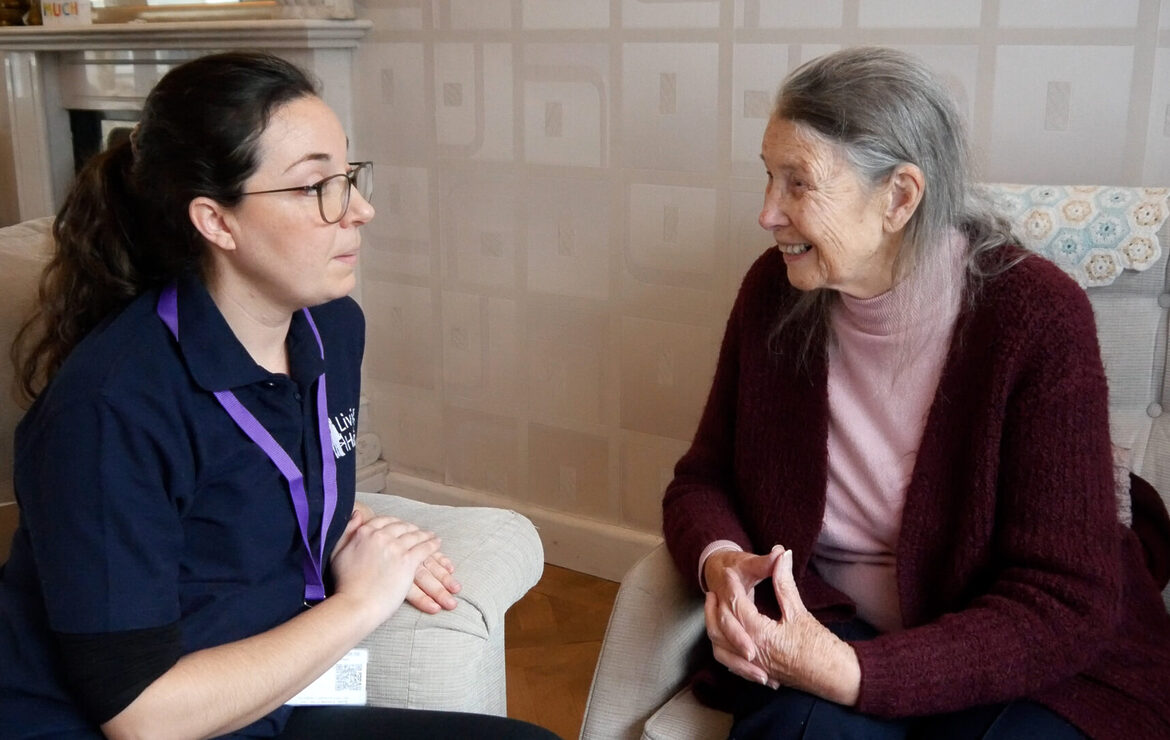
When it comes to caring for an ageing parent or loved one, knowing what kind of support they need can feel overwhelming. You may be wondering if they need full-time care or if a few hours of companionship each week would help them feel more engaged and safe.
At Living at Home, we understand how personal these decisions are. That’s why we offer both live-in care and companionship care across Swansea, and surrounding areas in Wales. This guide will help you understand the key differences between the two, who each is best suited for, and how we tailor every care plan to the unique needs of each family.
What Is Companionship Care?
Companionship care is a type of home care focused on emotional and social support. It doesn’t involve personal care or medical tasks, but instead helps individuals feel less lonely and more connected to the world around them.
Common activities include:
- Friendly conversation and social engagement
- Going for a walk, sharing a meal, or playing games
- Attending appointments or community events
- Light household help like preparing snacks or tidying up
- This type of support is offered through scheduled visits, typically a few hours at a time, and is ideal for:
- Older people who live alone and feel isolated
- Those with early-stage dementia or memory issues
- Individuals who are largely independent but benefit from regular check-ins and stimulation
Read more in our guide to companionship care.
Real Story: Sharon, Client’s Daughter
“The team who supports my mum is not only skilled but also exceptionally gifted in providing companionship support. The difference it’s made to her life and ours is superb.”
What Is Live-In Care?
Live-in care means having a professional carer move into your loved one’s home to provide round-the-clock support. This type of care includes help with personal tasks, daily routines, and ongoing companionship, ensuring someone is always nearby to offer reassurance and assistance.
Support can include:
- Personal care such as bathing, dressing, and toileting
- Help with mobility or moving safely around the home
- Medication reminders and health monitoring
- Preparing meals, doing laundry, and keeping the home tidy
- Emotional and social companionship throughout the day
Our carers are carefully matched with each family to ensure they suit both the practical and emotional needs of the person receiving care. Live-in care is ideal for:
- People with complex needs or multiple health conditions
- Those who wake during the night and need support
- Families looking for an alternative to residential care
- Individuals with limited mobility or who need help throughout the day
To learn more about our approach, visit our page on live-in care.
Real Story: Virat, Client
“The support I get has made such a difference – I’m doing things I never thought I could. My family feels less pressure, and I’m still living in my own home. I only wish I’d started sooner.”
Key Differences Between Live-In Care and Companionship Care
Companionship Care at Home
- Visits scheduled during specific times
- Offers emotional support, activities, and conversation
- Some light household help
- Does not include personal care
- Best for those who are mostly independent
Live-In Care Services
- Carer lives in the home and is always available
- Includes personal care, medication support, and domestic help
- Provides consistent support both day and night
- Helps maintain safety and routines
- Suitable for people with higher or changing needs
When Is It Time to Consider More Than Companionship?
If you’ve been relying on companionship visits but are starting to notice the following changes, it might be time to explore live-in care:
- Your loved one is forgetting meals or medication
- They’ve become more unsteady or had falls
- They need support with dressing or using the toilet
- You’re receiving calls during the night or they seem confused after dark
- You’re struggling to keep up with their growing needs
We know this is an emotional time. Living at Home offers gentle, pressure-free guidance to help you understand what’s right for your family.
How Living at Home Can Help
We start every journey with a friendly, informal chat to understand your family’s circumstances. If you choose to move forward, we meet you in person, take time to learn your routines, and match your loved one with the right carer.
Whether you’re exploring companionship care or looking into live-in care in Swansea, Cardiff, or the surrounding areas, our team is here to help. We provide:
- A personalised approach based on your family’s needs
- Flexible care plans that adapt as needs change
- Carers who are compassionate, experienced, and carefully chosen
- Ongoing support with regular reviews
Let’s Explore What’s Right for Your Family
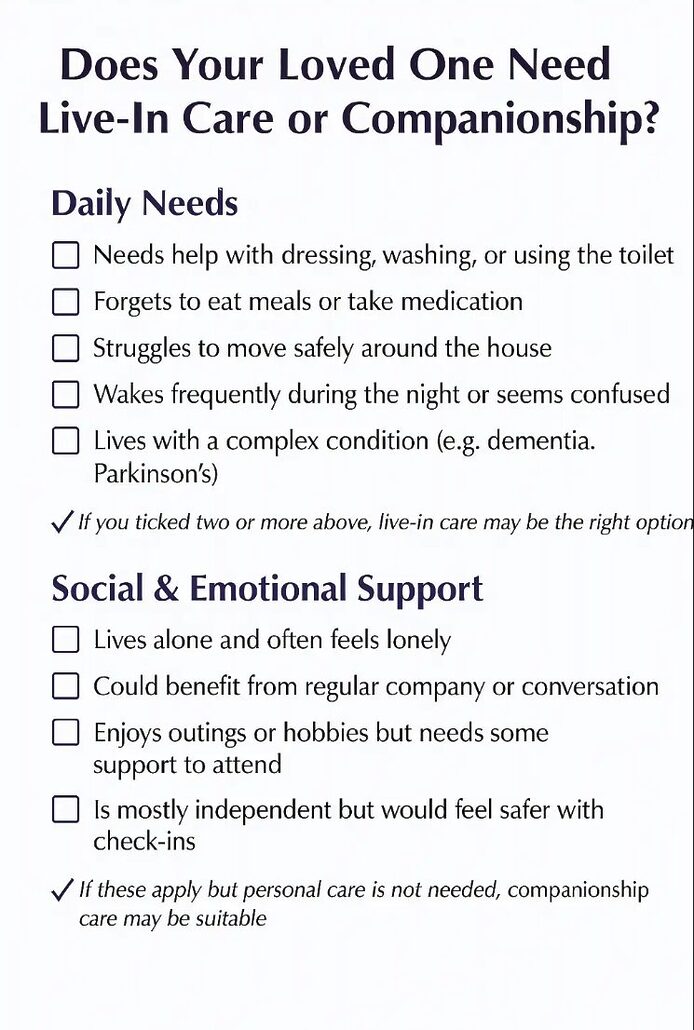 Choosing between companionship care and live-in support doesn’t have to be a rushed or stressful decision. We’re here to help you explore your options and find the right fit, whatever stage your loved one is at.
Whether your family is looking for occasional companionship or full-time, live-in care in Swansea, Cardiff, or beyond, Living at Home offers trusted home care services tailored to your needs.
Contact us for a free, no-obligation chat and let’s explore the right care solution together.
Frequently Asked Questions
Can companionship care eventually become live-in care?
Yes. Many families start with companionship visits and increase care as needs evolve. We can guide you through this transition.
How do you match carers to families?
We take the time to understand your loved one’s needs, personality, and preferences. Then we handpick carers who are the right fit practically and emotionally.
Is live-in care more expensive than a care home?
Cost depends on the level of care needed. We offer a range of services and are happy to talk through what might suit your family best.
What if my parent doesn’t want help but needs it?
This is common. We can offer gentle support and advice to help ease them into accepting care, starting with low-level services like companionship.
Can we use companionship care just once or twice a week?
Yes, our care plans are flexible. Many clients start with just a few visits per week.
Related posts

